





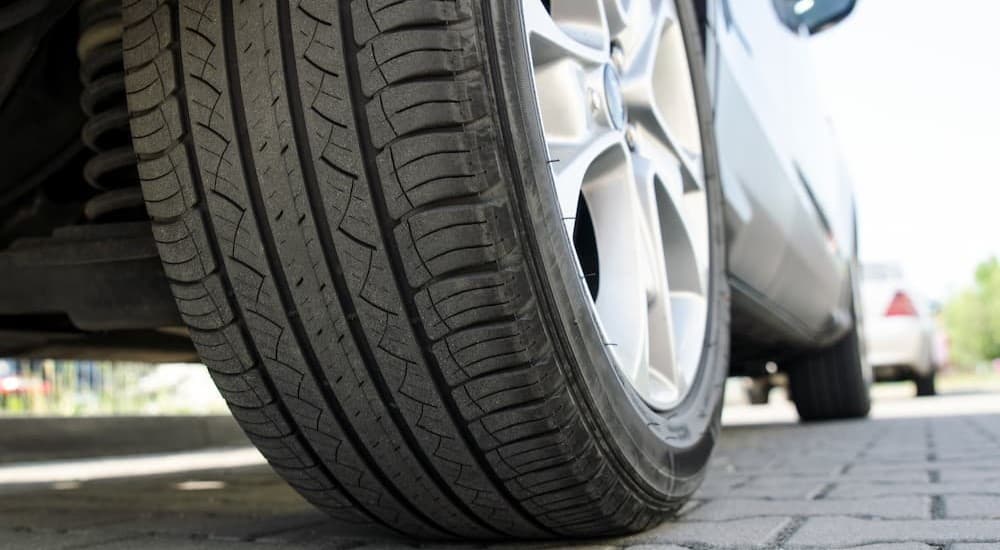
Sticking to a consistent maintenance routine can make a world of difference in getting the most out of your tires. Regular rotations, alignments, balancing, and pressure checks go a long way towards reducing uneven tread wear and friction while ensuring long-term performance in even the most challenging conditions. This can lead to a safer, more confident driving experience and save drivers some serious cash that might otherwise be lost on last-minute replacements at your local tire shop. Best of all, with a little research and the right tools, many of these routine maintenance tasks can be easily completed right in the comfort of your own driveway. Let’s walk through some of the basics and see just how easy it is to tap the true potential of your tires.
Checking Tire Pressure
Difficulty Level: Easy
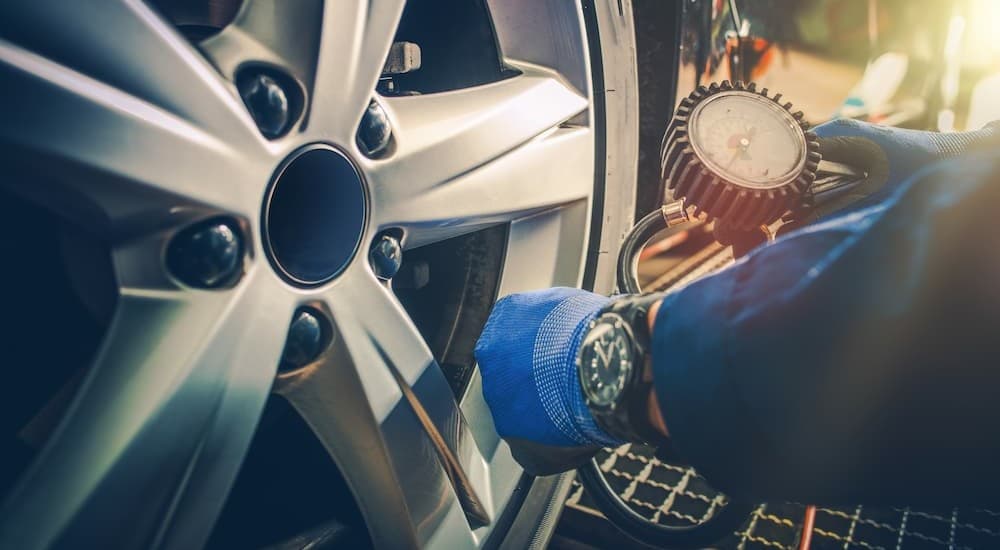
While this project once involved crouching beside your vehicle with a gauge while trying to keep track of tiny valve caps, years of automotive advancements have seen the process become largely digital. Tire Pressure Monitoring Systems (TPMS) became mandatory on all new vehicles in 2007. That said, these systems tend to vary widely in terms of convenience and functionality. While many mid- and high-end vehicles offer detailed data that lets drivers track tire pressure in real time, some models make do with a pared-down interface that only provides a general alert when pressure drops below a certain level.
A simple tire pressure gauge is one of the most affordable investments a driver can make. Unlike a TPMS, it gives drivers a unique opportunity to get an up-close look at where the rubber hits the road. These little check-ins allow drivers to monitor wear, inspect for defects, and potentially spot minor punctures or flat spots before they turn into an untimely blowout.
One important note about proper tire pressure is that while most drivers tend to reference the PSI figure stamped on the sidewall, that number is typically the tire’s maximum rating, not the recommended pressure. The correct pressure can be found in the owner’s manual or on a sticker in the driver’s-side doorjamb, along with some other helpful tire-related tips related to ambient temperature, elevation, and more.
Checking Tire Tread
Difficulty Level: Easy
A tire isn’t just a simple rubber circle. It’s a precisely engineered automotive component that’s designed with some very specific properties that ensure consistent performance and safety. Just take the tire’s tread pattern, for example. These unique, grooved patterns are designed to quickly and effectively expel water, snow, and mud before they can compromise traction.
A good tread pattern works well when a tire is nice and fresh, but as the rubber wears down over time, increasingly shallow grooves lose their effectiveness. The average all-season tire is typically rated to last three to five years, or 40,000 to 70,000 miles. Performance and snow tires typically have a shorter lifespan of 20,000 to 30,000 miles.
These mileage ratings provide a good baseline for expected performance, but a tire’s tread life ultimately depends on how, where, and when a vehicle is being driven. Luckily, there’s an easy way to keep track of tread life that costs only one cent. The penny test is a tried-and-true method for gauging tread depth. While it might not be the most accurate measure of tire health, it beats dealing with a blowout at 70 mph.
Simply take a penny and place it in the shallowest groove with Abraham Lincoln’s head facing downwards. If you can’t see anything above Honest Abe’s nose, your tires are probably in perfect health. If you can see Lincoln’s entire forehead, it means you’re still working with about 4/32 of an inch worth of tread and will need to start thinking about a replacement in the near future. If you can see the top of Abe’s head or anything above it, your tread is in the danger zone with around 2/32 of an inch of remaining.
It can be difficult to keep track of every tire-related task, but by grouping these chores together, drivers can easily ensure that key maintenance projects don’t fall by the wayside. Experts recommend checking both tire pressure and tread depth once per month. Every visit to the air pump provides the perfect excuse for a little tread check.
Rotating Your Tires
Difficulty Level: Moderate
At first glance, this tire maintenance task might not make much sense. Aren’t a vehicle’s tires pretty thoroughly rotated every time you cruise down the road? Dad jokes aside, regular tire rotation is an easy way to maximize your investment.
As you go about your daily driving, each tire is subjected to unique forces and pressures based on your driving habits and natural patterns. On front-wheel drive vehicles, the front tires tend to wear out faster than the back tires. They handle not only steering and braking, but also acceleration, while the back tires do only a little braking and keep the back of the car up off the ground. Rotating tires helps even out wear and keeps all four tires lasting as long as possible. Over- and under-inflation, improper alignment, and balancing can also lead to accelerated wear, but these issues can also be easily addressed with regular rotations.
Tire rotation simply involves removing each wheel and moving it to another corner of the vehicle to ensure a consistent wear pattern across all four tires. There are a few guidelines you’ll want to keep in mind. When dealing with a FWD vehicle, the front tires should be moved straight back while the rear tires should be moved forward and crossed to the opposite side. (In other words, the left-rear tire becomes the right-front tire). Take the opposite approach for rear-wheel drive models, and stick to a simple X pattern for all-wheel drive vehicles.
Brands typically recommend a tire rotation every 5,000 to 7,000 miles, though the exact interval may vary by model. While this project can be easily completed by most competent, at-home mechanics, there is one compelling reason to seek professional help. A tire rotation gives your mechanic a great opportunity to give your tires a close inspection and spot any issues that could see you spending your afternoon in the breakdown lane.
Balancing and Alignment
Difficulty Level: Difficult
Tire rotation is important, but it’s just one small part of a good maintenance routine. Wheel balancing and alignment are often performed right alongside a tire rotation, giving drivers the chance to save a little money by consolidating the three tasks into one visit. Tires should be balanced at the same rate they’re rotated, about once every 5,000 to 7,000 miles, and aligned every 10,000 to 15,000 miles, or whenever purchasing new tires.
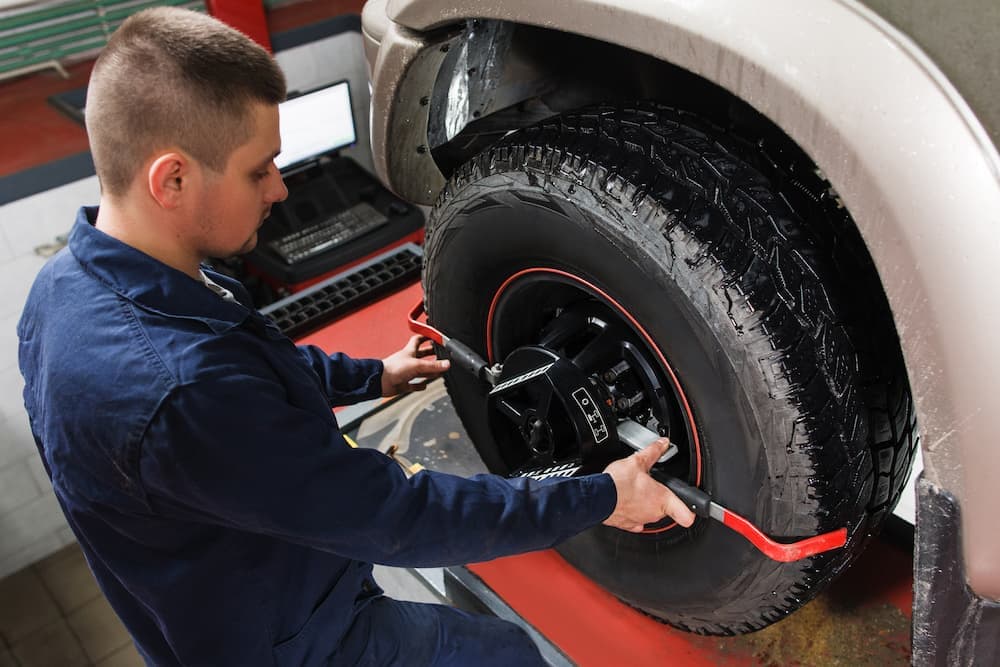
What are balancing and alignment, and how do they help to reduce the wear and tear that comes with daily use? Wheel balancing is primarily designed to address uneven weight distribution. Your wheels tend to take a lot of abuse as you ride around town in your car, truck, or SUV, especially if you regularly encounter potholes, frost heaves, and other types of bumpy terrain. This type of wear can lead to a wheel developing heavier spots that threaten to disrupt weight distribution. When you visit your local auto shop or dealership service center, technicians use a balancing machine to assess each wheel and then address the problem by affixing small weights to the rim. A properly balanced wheel not only reduces vibrations and extends tread life, but it can also minimize stress on the suspension and other pricey parts.
Finally, there’s alignment. Despite the name, wheel alignment actually involves adjusting a vehicle’s suspension, not the wheels themselves. Ideally, each tire is designed to operate parallel to the others and perpendicular to the ground. However, over time, wheels tend to get thrown out of whack by common obstacles and tough conditions. Alignment sets everything straight, preventing a vehicle from pulling to one side while improving control, comfort, and efficiency.
Developing Good Habits
Difficulty Level: Easy
Sometimes maintenance is more about behavior than a specific task. Drivers can easily shave years off a set of tires by being over-aggressive behind the wheel. However, longevity is within reach if you can just master a few simple habits.
First of all, just slow down. Putting the pedal to the metal might be an easy way to get your blood pumping or make up for a morning commute that’s running behind schedule, but it can also have a dramatic effect on road safety, performance, and tread life. You not only wear through the rubber at an accelerated rate when driving at high speeds, but you’re also less likely to avoid hazardous debris and prone to experiencing a more significant impact if you do make contact.
The same goes for the left pedal. Stomping on the brakes generates significant heat and friction, wearing away the rubber and leading to bald spots, uneven tread, and other less desirable characteristics. Some studies suggest that aggressive braking can reduce overall tread life by as much as 30%, underscoring the importance of a measured approach.
It’s easy to forget about the spare tire, especially if it’s stowed out of sight beneath the rear cargo area, but you don’t want to end up on the side of the road with a flat only to realize that your spare is in equally bad shape. Try to check your spare tire every couple of months and add a little extra air if it looks like it might be getting low. Older spare tires should also be replaced every six to ten years, even if they’ve never been used, due to the natural degradation of the rubber compounds.
Keep Your Ride Rolling At LaFontaine Chevrolet Dexter
You don’t have to be a seasoned mechanic to get the most out of your tires. While there are some important safety considerations to keep in mind, most drivers can handle most of their scheduled tire maintenance themselves. Things get a little tricky when brake calipers, rotors, suspension components, and TPMS are involved, which is why it’s so important to find a partner you can trust with all your maintenance and repair needs.
Even something as simple as mounting or unmounting a new tire can end up costing you if you don’t have the right tools and technique, but that’s where LaFontaine Chevrolet Dexter comes in. Our in-house service center is staffed by a friendly team of experienced technicians who understand what it takes to find success on Michigan roads. We offer a comprehensive suite of tire maintenance and repair services, including rotation and alignment, balancing, patching, tread checks, and more. We’re always running sales and specials that allow our loyal customers to keep a little extra cash in their pocket and even offer financing options so that you won’t have to wait for your next paycheck to enjoy a safe, confident driving experience.
Connect with us


- Car Dealership
- Chevy Blazer EV for Sale
- Chevy Blazer for Sale
- Chevy Dealer
- Chevy Dealer Near Ann Arbor
- Chevy Dealer Near Brighton
- Chevy Dealer Near Chelsea
- Chevy Dealer Near Jackson
- Chevy Dealer Near Saline
- Chevy Dealer Near South Lyon
- Chevy Dealer Near Whitmore Lake
- Chevy Dealer Near Ypsilanti
- Chevy Equinox EV for Sale
- Chevy Silverado 1500 for Sale
- Chevy Silverado for Sale
- Chevy Trailblazer for Sale
- Tire Shop
- Used Car Dealer
- Used Chevy Dealer
- Used Chevy for Sale
- Used SUVs for Sale
- Used Trucks for Sale