




Blog / Tire Shop

Keep Rolling With These Tire Maintenance Tips

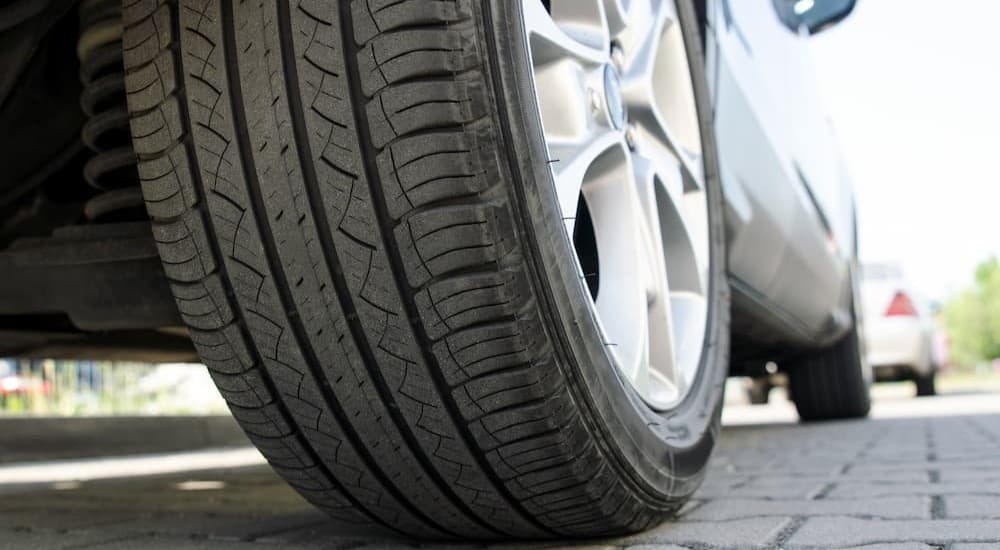
Close-up of a tire on a vehicle.

Sticking to a consistent maintenance routine can make a world of difference in getting the most out of your tires. Regular rotations, alignments, balancing, and pressure checks go a long way towards reducing uneven tread wear and friction while ensuring long-term performance in even the most challenging conditions. This can lead to a safer, more confident driving experience and save drivers some serious cash that might otherwise be lost on last-minute replacements at your local tire shop. Best of all, with a little research and the right tools, many of these routine maintenance tasks can be easily completed right in the comfort of your own driveway. Let’s walk through some of the basics and see just how easy it is to tap the true potential of your tires.

Checking Tire Pressure

Difficulty Level: Easy

While this project once involved crouching beside your vehicle with a gauge while trying to keep track of tiny valve caps, years of automotive advancements have seen the process become largely digital. Tire Pressure Monitoring Systems (TPMS) became mandatory on all new vehicles in 2007. That said, these systems tend to vary widely in terms of convenience and functionality. While many mid- and high-end vehicles offer detailed data that lets drivers track tire pressure in real time, some models make do with a pared-down interface that only provides a general alert when pressure drops below a certain level. 

A simple tire pressure gauge is one of the most affordable investments a driver can make. Unlike a TPMS, it gives drivers a unique opportunity to get an up-close look at where the rubber hits the road. These little check-ins allow drivers to monitor wear, inspect for defects, and potentially spot minor punctures or flat spots before they turn into an untimely blowout.  

One important note about proper tire pressure is that while most drivers tend to reference the PSI figure stamped on the sidewall, that number is typically the tire’s maximum rating, not the recommended pressure. The correct pressure can be found in the owner’s manual or on a sticker in the driver’s-side doorjamb, along with some other helpful tire-related tips related to ambient temperature, elevation, and more.

Checking Tire Tread

Difficulty Level: Easy

A tire isn’t just a simple rubber circle. It’s a precisely engineered automotive component that’s designed with some very specific properties that ensure consistent performance and safety. Just take the tire’s tread pattern, for example. These unique, grooved patterns are designed to quickly and effectively expel water, snow, and mud before they can compromise traction. 

A good tread pattern works well when a tire is nice and fresh, but as the rubber wears down over time, increasingly shallow grooves lose their effectiveness. The average all-season tire is typically rated to last three to five years, or 40,000 to 70,000 miles. Performance and snow tires typically have a shorter lifespan of 20,000 to 30,000 miles. 

These mileage ratings provide a good baseline for expected performance, but a tire’s tread life ultimately depends on how, where, and when a vehicle is being driven. Luckily, there’s an easy way to keep track of tread life that costs only one cent. The penny test is a tried-and-true method for gauging tread depth. While it might not be the most accurate measure of tire health, it beats dealing with a blowout at 70 mph.    

Simply take a penny and place it in the shallowest groove with Abraham Lincoln’s head facing downwards. If you can’t see anything above Honest Abe’s nose, your tires are probably in perfect health. If you can see Lincoln’s entire forehead, it means you’re still working with about 4/32 of an inch worth of tread and will need to start thinking about a replacement in the near future. If you can see the top of Abe’s head or anything above it, your tread is in the danger zone with around 2/32 of an inch of remaining.  

It can be difficult to keep track of every tire-related task, but by grouping these chores together, drivers can easily ensure that key maintenance projects don’t fall by the wayside. Experts recommend checking both tire pressure and tread depth once per month. Every visit to the air pump provides the perfect excuse for a little tread check.

A technician checking tire pressure.

Rotating Your Tires

Difficulty Level: Moderate

At first glance, this tire maintenance task might not make much sense. Aren’t a vehicle’s tires pretty thoroughly rotated every time you cruise down the road? Dad jokes aside, regular tire rotation is an easy way to maximize your investment. 

As you go about your daily driving, each tire is subjected to unique forces and pressures based on your driving habits and natural patterns. On front-wheel drive vehicles, the front tires tend to wear out faster than the back tires. They handle not only steering and braking, but also acceleration, while the back tires do only a little braking and keep the back of the car up off the ground. Rotating tires helps even out wear and keeps all four tires lasting as long as possible. Over- and under-inflation, improper alignment, and balancing can also lead to accelerated wear, but these issues can also be easily addressed with regular rotations.  

Tire rotation simply involves removing each wheel and moving it to another corner of the vehicle to ensure a consistent wear pattern across all four tires. There are a few guidelines you’ll want to keep in mind. When dealing with a FWD vehicle, the front tires should be moved straight back while the rear tires should be moved forward and crossed to the opposite side. (In other words, the left-rear tire becomes the right-front tire). Take the opposite approach for rear-wheel drive models, and stick to a simple X pattern for all-wheel drive vehicles. 

Brands typically recommend a tire rotation every 5,000 to 7,000 miles, though the exact interval may vary by model. While this project can be easily completed by most competent, at-home mechanics, there is one compelling reason to seek professional help. A tire rotation gives your mechanic a great opportunity to give your tires a close inspection and spot any issues that could see you spending your afternoon in the breakdown lane.

Balancing and Alignment 

Difficulty Level: Difficult

Tire rotation is important, but it’s just one small part of a good maintenance routine. Wheel balancing and alignment are often performed right alongside a tire rotation, giving drivers the chance to save a little money by consolidating the three tasks into one visit. Tires should be balanced at the same rate they’re rotated, about once every 5,000 to 7,000 miles, and aligned every 10,000 to 15,000 miles, or whenever purchasing new tires.   

What are balancing and alignment, and how do they help to reduce the wear and tear that comes with daily use? Wheel balancing is primarily designed to address uneven weight distribution. Your wheels tend to take a lot of abuse as you ride around town in your car, truck, or SUV, especially if you regularly encounter potholes, frost heaves, and other types of bumpy terrain. This type of wear can lead to a wheel developing heavier spots that threaten to disrupt weight distribution. When you visit your local auto shop or dealership service center, technicians use a balancing machine to assess each wheel and then address the problem by affixing small weights to the rim. A properly balanced wheel not only reduces vibrations and extends tread life, but it can also minimize stress on the suspension and other pricey parts.   

Finally, there’s alignment. Despite the name, wheel alignment actually involves adjusting a vehicle's suspension, not the wheels themselves. Ideally, each tire is designed to operate parallel to the others and perpendicular to the ground. However, over time, wheels tend to get thrown out of whack by common obstacles and tough conditions. Alignment sets everything straight, preventing a vehicle from pulling to one side while improving control, comfort, and efficiency.
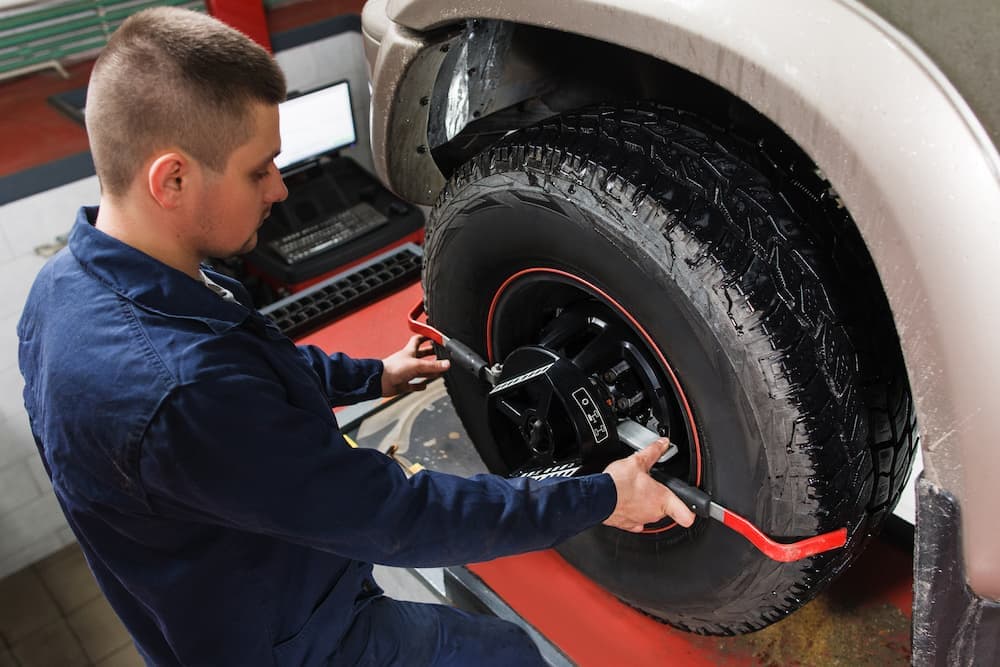
A technician working on a tire.

Developing Good Habits

Difficulty Level: Easy

Sometimes maintenance is more about behavior than a specific task. Drivers can easily shave years off a set of tires by being over-aggressive behind the wheel. However, longevity is within reach if you can just master a few simple habits. 

First of all, just slow down. Putting the pedal to the metal might be an easy way to get your blood pumping or make up for a morning commute that’s running behind schedule, but it can also have a dramatic effect on road safety, performance, and tread life. You not only wear through the rubber at an accelerated rate when driving at high speeds, but you’re also less likely to avoid hazardous debris and prone to experiencing a more significant impact if you do make contact.    

The same goes for the left pedal. Stomping on the brakes generates significant heat and friction, wearing away the rubber and leading to bald spots, uneven tread, and other less desirable characteristics. Some studies suggest that aggressive braking can reduce overall tread life by as much as 30%, underscoring the importance of a measured approach. 

It’s easy to forget about the spare tire, especially if it’s stowed out of sight beneath the rear cargo area, but you don’t want to end up on the side of the road with a flat only to realize that your spare is in equally bad shape. Try to check your spare tire every couple of months and add a little extra air if it looks like it might be getting low. Older spare tires should also be replaced every six to ten years, even if they’ve never been used, due to the natural degradation of the rubber compounds.

Keep Your Ride Rolling At LaFontaine Chevrolet Dexter

You don't have to be a seasoned mechanic to get the most out of your tires. While there are some important safety considerations to keep in mind, most drivers can handle most of their scheduled tire maintenance themselves. Things get a little tricky when brake calipers, rotors, suspension components, and TPMS are involved, which is why it’s so important to find a partner you can trust with all your maintenance and repair needs. 

Even something as simple as mounting or unmounting a new tire can end up costing you if you don’t have the right tools and technique, but that’s where LaFontaine Chevrolet Dexter comes in. Our in-house service center is staffed by a friendly team of experienced technicians who understand what it takes to find success on Michigan roads. We offer a comprehensive suite of tire maintenance and repair services, including rotation and alignment, balancing, patching, tread checks, and more. We’re always running sales and specials that allow our loyal customers to keep a little extra cash in their pocket and even offer financing options so that you won’t have to wait for your next paycheck to enjoy a safe, confident driving experience.
Posted in:

Recommended Posts

A red 2026 Chevy Silverado 3500 HD Chassis Cab parked at a nursery

How Would You Build a 2026 Silverado 3500 HD Chassis Cab for Your Business?

Someone searching for a Chevy Silverado 3500 for sale may need more than a powerful truck with a conventional box bed. Some jobs call for enclosed tool storage, a hydraulic dump body, or an open platform capable of carrying bulky equipment. The 2026 Chevy Silverado 3500 HD Chassis Cab provides the foundation needed to create one of these specialized commercial vehicles. Contractors, agricultural operations, property-maintenance companies, delivery businesses, and fleet managers can begin with the same heavy-duty chassis and arrive at very different finished trucks. That’s the beauty of the Silverado 3500 HD Chassis Cab! Building the right one involves several connected decisions: gas or diesel power, Regular Cab or Crew Cab, cab-to-axle length, and the type of upfit equipment you need installed. Payload capacity, combined weight ratings, fuel tank size, and fleet support needs must also be part of the discussion. The objective is not simply to order the most powerful configuration available; it's to build a 2026 Silverado 3500 HD Chassis Cab around the work your business actually performs. We have much to discuss today, so let’s get a move on because—as any business owner knows—time is money! more Start With the Weight of the Work A chassis cab provides the cabin, frame, powertrain, and running gear while leaving the rear body open for specialized equipment—a design that allows you to turn the Silverado 3500 HD into anything you need it to be: a utility truck, dump truck, flatbed, or another vocational vehicle capable of performing tasks a conventional bed box cannot support effectively. The truck and its upfit should be planned together. An installed body contributes to the vehicle’s total weight, as do tools, supplies, occupants, and other equipment. However, you should also know that GM’s New Vehicle Limited Warranty doesn’t cover equipment or alterations supplied by independent companies, meaning GM is not responsible for their installation, safety, or overall quality; it only covers everything else. Selecting a qualified upfitter is thus an essential step in configuring your truck. A truck’s Gross Vehicle Weight Rating (GVWR) accounts for its occupants, installed equipment, and cargo, while payload represents the weight your truck can carry. Its Gross Combined Weight Rating (GCWR) considers the combined weight of the truck and its trailer. The 2026 Silverado 3500 HD Chassis Cab has a maximum available GVWR of 14,000 lbs and a GCWR between 24,000 and 40,000 lbs, with a maximum payload capacity ranging from 6,047 to 7,329 lbs. These measurements show that the Chevy Silverado 3500 HD is ready to handle a variety of responsibilities. The maximum 7,329-lb payload capacity requires a 2WD Regular Cab, so it doesn’t apply to every configuration. Maximum figures can demonstrate your truck’s potential, but the door-jamb label will be most accurate; this label will identify the vehicle’s true capacity—all upfit equipment considered—so it should guide your real-world loading decisions. Choose an Engine Based on Intent Both of the 2026 Silverado 3500 HD Chassis Cab's engines provide heavy-duty output and pair with a 10-speed Allison automatic transmission. Choosing between these engines should come down to your truck’s expected use rather than the assumption that every business needs the same powertrain. The standard 6.6L V8 gas engine generates 401 hp and 464 lb-ft of torque. Chevy identifies direct injection, variable valve timing, and a deep-skirt cast-iron engine block among its engineering features. We’d say this engine is best suited for tasks such as assisting a property-maintenance company, a contractor, or a delivery operation whose truck primarily travels between local job sites. It provides substantial capacity to carry equipment and materials without requiring buyers to choose diesel power when the business does not regularly handle immense loads. The available 6.6L Duramax Turbo-Diesel V8 increases output to 470 hp and 975 lb-ft of torque. Chevy also equips it with a segment-exclusive air-induction system and variable-geometry turbocharger, as well as an exhaust brake to help you manage a heavily loaded truck or truck-and-trailer combination. Duramax-equipped models can also be configured with an available large axle featuring a 12-inch ring gear. These qualities may make the diesel engine especially relevant to businesses that tow frequently, travel long distances, or routinely operate with substantial combined weight. Instead of declaring either engine universally preferable, consider how your truck will spend an ordinary workweek. How much weight will it regularly manage? Will it tow daily or only occasionally? Will it operate locally or cover longer routes? If the installed equipment requires engine-driven auxiliary power, the available Power Take-Off Package may also influence your decision. Match the Cab and Frame to the Upfit Cab choice affects both passenger accommodations and the amount of body frame available behind the cab. For businesses that prioritize upfit room or maximum available payload, the Regular Cab may be the logical starting point. Chevy offers it with 60-inch and 84.5-inch cab-to-axle measurements, with the longer option supporting applications that require additional body length. The Crew Cab caters to operations that need to transport several workers between job sites. It uses a 60-inch cab-to-axle measurement and provides 44.5 inches of front legroom. Although it sacrifices some of the layout flexibility associated with the Regular Cab's longer frame, its additional seating may be essential for a business whose crew and equipment must travel together. From there, your truck’s intended assignments can point toward the proper upfit. You can take this in several possible directions: A utility body can provide organized storage for electricians, plumbers, telecommunications crews, municipal departments, and mobile technicians. A dump body may suit landscapers, contractors, farms, and property-maintenance teams moving soil, gravel, mulch, or other loose material. A flatbed can give construction companies, agricultural operations, and equipment suppliers an open platform for bulky or irregularly shaped cargo. Vocational equipment requiring engine-driven auxiliary power may benefit from the available Power Take-Off Package. The 2026 Silverado 3500 HD Chassis Cab also includes a heavy-duty locking rear differential and sturdy 18-inch steel dual-rear-wheel wheels that support its commercial mission. Whichever body you select, final capability depends on the entire configuration. The chassis, upfit, passengers, tools, cargo, and trailer must all be considered before your truck goes to work! Plan for Long Days and Busy Routes A commercial vehicle’s usefulness is not determined entirely by what it can carry. Refueling downtime, driver support, and vehicle oversight can also influence productivity. Chevy offers two fuel tank options, with an available capacity well over 60 gallons. That larger option is great for agricultural users, rural businesses, and crews that spend long days traveling between distant job sites. Actual driving range will naturally vary with the powertrain, configuration, load, route, and operating conditions. The Silverado 3500 HD Chassis Cab also offers several technologies intended to assist the driver. These include Following Distance Indicator, Forward Collision Alert, Lane Departure Warning, Automatic Emergency Braking, Front Pedestrian Braking, and IntelliBeam automatic headlights. Such features can provide useful support during long routes, changing traffic conditions, and busy workdays—especially when multiple employees share the same vehicle. Available OnStar Vehicle Insights can help businesses monitor working vehicles more effectively. It can provide information to support route planning, identify service needs, monitor driver behavior, and enable general fleet oversight. Organized maintenance and operational planning remain essential even when the underlying truck is built for demanding workloads. What Should You Decide Before Shopping? Before choosing a 2026 Silverado 3500 HD Chassis Cab, define what the finished vehicle must accomplish by asking… What body or equipment will be installed? How much will the completed upfit weigh? How many people, tools, and materials will the truck carry? Will it regularly pull a trailer? Will its typical uses favor gas or diesel power? Is a Regular Cab sufficient, or must it transport a crew? Which cab-to-axle length accommodates the intended body? Would the PTO Package or a larger fuel tank help? Involving our dealership and a qualified upfitter early can help keep those decisions connected. Buyers should also verify the ratings for their exact vehicle rather than relying exclusively on the maximum advertised figures. Configuring a chassis cab is ultimately a business decision, not merely a matter of personal preference. Turn the Chassis Cab Into a Business Tool The 2026 Chevy Silverado 3500 HD Chassis Cab is designed to become the truck a particular operation requires. Its gas and diesel V8 engines both pair with 10-speed automatic transmissions, while two cab sizes and varying cab-to-axle lengths allow businesses to create different configurations. Not to mention the freedom to add utility, dump, and flatbed upfits, illustrating only a few ways this model's impressive GCWR and payload capacity can be put to work. The most important question is not simply “How powerful is this Silverado?” It’s “How effectively will this truck help support my daily operations?” Commercial shoppers are a special class of consumer, and we believe that every hard worker deserves a vehicle that satisfies their needs.

Black 2026 Chevy Silverado 3500 HD towing a horse trailer.

Why the 2026 Chevy Silverado 3500 HD Is a Strong Choice for Fifth-Wheel Towing

A large fifth wheel camper asks more from a truck than ordinary weekend towing. The tow vehicle must manage substantial trailer weight, carry heavy pin weight over the rear axle, remain composed in crosswinds, and provide dependable control during long highway trips. For RV owners who travel with spacious campers, a Chevy Silverado 3500 for sale brings the heavy-duty construction and available equipment needed for the job. Additionally, its available dual-rear-wheel configurations, strong gas and diesel powertrains, trailering technology, and fifth-wheel-ready features support confident travel. Our team at LaFontaine Chevrolet Dexter is well-versed in what the 2026 Silverado 3500 HD brings to the table and why it is a strong choice for fifth wheel towing duties. You can view our selection online or stop by the dealership for a closer look. Either way, we will take the time to answer any questions you have and provide a streamlined shopping experience. more Built for Fifth-Wheel Demands Fifth wheel campers place their hitch connection in the truck bed rather than behind the rear bumper. This design can support stable towing, but it also transfers significant pin weight directly to the truck. The maximum fifth wheel/gooseneck towing capacity for the 3500 HD ranges from 18,300 lbs to 36,000 lbs, depending on the configuration. Additionally, the Chevy Silverado 3500 HD has a heavy-duty frame, suspension, axles, brakes, and a cooling system designed for demanding loads. Chevy is known for giving drivers many configuration options, and the 3500 HD is no different. RV owners can choose among several cab, bed, drivetrain, engine, and rear-wheel configurations to match the truck to the camper with ease. Stronger Power for Long-Distance RV Travel The Silverado 3500 HD offers a 6.6L V8 producing up to 401 hp and 464 lb-ft of torque, and a 6.6L Duramax turbo-diesel V8 rated at 470 hp and 975 lb-ft of torque. The gas engine makes sense for owners who tow seasonally, stay closer to home, or simply prefer a gas-powered truck. It provides strong, heavy-duty output and can handle many fifth wheel campers when paired with the correct configuration. For large campers and frequent interstate travel, the available Duramax diesel holds particular appeal. With its higher horsepower and torque, it supports steady acceleration, confident merging, and controlled progress on grades. That torque is helpful when a loaded camper, passengers, water, supplies, and outdoor gear all add to the combination's weight. Both options are paired with a 10-speed Allison automatic transmission, giving you two capable powertrains to choose from based on trailer size and driving habits. Allison transmissions are known for their smooth power delivery, which helps support controlled towing across varied terrain, as well as improved fuel economy and better heat management. Why Dual Rear Wheels Matter A dual-rear-wheel configuration is one of the Silverado 3500 HD's most useful options for fifth wheel owners. A "dually" places two wheels on each side of the rear axle, widening the truck's rear stance, increasing tire contact, and providing better support for the load. That extra width can provide a more grounded feel when a tall camper meets wind from passing tractor-trailers or when traveling on open highways. It also helps the rear of the truck manage heavy pin weight, reducing the unsettled feeling that can occur when a tow vehicle operates too close to its limits. The dual-rear-wheel setup can benefit RV owners in several ways: Greater Rear-Axle Support: Four rear tires help carry the concentrated weight of a fifth wheel hitch and a loaded camper. Improved Lateral Stability: The wider rear track can help the truck feel more settled in curves, during lane changes, and in gusty conditions. Added Tire Redundancy: An additional tire on each side may provide an extra margin of control if one rear tire loses pressure, though the driver must still stop safely. Higher-Capacity Configurations: Chevy pairs dual rear wheels with several of the Silverado 3500 HD's strongest fifth wheel and gooseneck ratings. It is worth noting that a "dually" is wider and requires more thought and care when navigating parking lots, construction zones, and narrow campsites. However, for owners who tow RVs regularly, the trade-off often yields greater stability and a more relaxed experience on the road. Stability Goes Beyond a Dual Axle A dual-rear-wheel truck can improve stability, but a safe setup still depends on correct handling and matched equipment. The camper's loaded weight, not its advertised dry weight, must remain within the truck's limits. This means that owners will need to account for power stations, propane, water, food, clothing, camping gear, passengers, and anything else carried in the truck. Pin weight also deserves close attention because it counts against the truck's payload capacity. For all these reasons, it's important to know exactly what your Silverado 3500 HD is capable of, and our team can help you sort through those details. Several smart habits also support successful fifth wheel travel: Balance the Camper Carefully: Load heavy items low and secure them so they cannot shift during braking or turns. Use the Correct Hitch: Match the hitch rating to the trailer, and confirm compatibility with the truck's bed and factory-prepped equipment. Check Tires Before Every Trip: Inspect pressure, tread, sidewalls, and valve stems on both the truck and the camper. Leave Room in the Ratings: A setup with a reasonable capacity margin can feel more composed than one operating at its maximum. Adjust for Conditions: Slow down for travel, rain, snow, construction, rough pavement, and limited visibility. Technology That Supports Towing Confidence While power and chassis strength matter, visibility can make just as much difference during RV travel. The 2026 Silverado 3500 HD offers up to eight available cameras with up to 14 views, helping drivers see key areas around the truck and trailer. Available Bed View can help you align the truck with an in-bed fifth wheel hitch, while Hitch View provides a closer look during connection. Meanwhile, Transparent Trailer View can create a virtual view behind a compatible trailer, including certain fifth wheel and gooseneck setups. That's not all. The available in-vehicle trailering app helps you get organized before hitting the road. You can create trailer profiles, follow pre-departure checklists, and monitor compatible trailer connections. These tools can reduce guesswork when connecting in poor weather or preparing for a long day on the highway. In addition, the available Trailer Side Blind Zone Alert extends traditional blind spot monitoring along the length of the compatible trailer. As a result, you can transition from one lane to the next with better confidence and awareness. Ready for the Way RV Owners Travel RV owners often have bicycles, generators, outdoor furniture, tools, pet supplies, and equipment for extended stays on board. The good news is that the Silverado 3500 HD's varied configurations support the way RV owners travel, with Crew Cabs offering comfortable passenger space while long beds support fifth wheel hitch placement and clearance. The 3500 HD also includes practical touches for frequent campers, such as an integrated bed step that provides better access, even with a fifth wheel or gooseneck trailer connected. Additionally, available bed lighting can help with nighttime hookups. In the cab, standard and available features such as a digital driver display, smartphone compatibility, and a driver-focused layout help streamline directions, communication, and vehicle information. Finally, for drivers dealing with cold mornings, changing road surfaces, and unpredictable Midwest weather, available four-wheel drive can add confidence when traction becomes limited. Check Out the 2026 Chevy Silverado 3500 HD Today As you can see, the Silverado 3500 HD addresses the needs that matter most to fifth wheel owners: strong power, substantial load capacity, available dual rear wheels, useful trailering technology, and configurations designed for in-bed hitching. Our team at LaFontaine Chevrolet Dexter can help you find the right match for your driving, towing, and camping needs and answer any questions you might have along the way. If you're ready to take the next step, reach out to a team member online or stop by our dealership today.

A blue 2023 Chevy Malibu Parked in the city.

CarBravo and BudgetBravo: A Confident Way to Shop Used

Want to know a secret? Shopping for a used vehicle doesn't have to feel like solving a puzzle or maintaining a delicate balance among your budget, quality standards, and must-haves. When you visit a used car dealer, you deserve transparency, confidence, and options that fit your needs. more So, what's the answer? Enter: CarBravo and BudgetBravo. Let's Set the Scene At LaFontaine Chevrolet Dexter, you're guaranteed a world-class Family Deal experience. Yet, in today's market, having top-quality used models takes that experience even further. Shoppers are looking for the best possible value, skyrocketing the demand for used vehicles and broadening the appeal of Certified Pre-Owned programs. Drivers want the affordability of a used vehicle without the uncertainty that often comes with buying pre-owned. That's where CarBravo and Budget Bravo stand apart. What Is CarBravo? General Motors has shaped the automotive landscape for over a century, demonstrating its keen awareness of drivers' needs from the rise of the automobile in the early 1900s to the stunning Chevrolet, Buick, GMC, and Cadillac cars, trucks, and SUVs on lots today. General Motors takes this insight and pioneering spirit further with CarBravo. This premium pre-owned vehicle program replaces the risk of buying a used vehicle with the confidence you deserve and adds a long list of rewards. Think of CarBravo as the bridge between buying new and buying used. Benefits of CarBravo: Round 1 Shopping for a CarBravo vehicle offers a wide range of benefits that aren't found on most used vehicles. CarBravo models often include: Comprehensive vehicle inspections Limited warranty coverage Roadside assistance Vehicle history reports Courtesy transportation, and more. These benefits create a transparent ownership experience that can provide reassurance long after you leave the dealership. Tiers of Confidence: Round 2 One of the most unique aspects of the program is that General Motors recognizes that not every shopper has the same needs, budget, or preferences. That's why the program includes two certification levels: CarBravo BudgetBravo This tiered approach expands your options while maintaining the same quality standards across a broader range of vehicles. So, what impact does that have on your experience? Let's Make It Personal General Motors doesn't limit certification to newer models, but extends that privilege to older models that meet certain age, mileage, and qualification standards. The result? Our customers enjoy: More top-quality choices across a wider range of price points. Greater flexibility and better overall value. Increased confidence when shopping for pre-owned cars, trucks, and SUVs. Whether you're searching for a newer SUV with advanced connectivity and driver-assist technologies or need a budget-friendly commuter car, there's a CarBravo or BudgetBravo model that fits. So, what vehicles qualify for GM's certified used vehicle program? Let's Set the Standards: Age and Mileage GM stands behind every used car, truck, and SUV in its CarBravo and BudgetBravo tiers, instilling confidence and ensuring transparency across its selection. These efforts start with GM's stringent age and mileage standards, which determine which vehicles pass the initial round of qualification. CarBravo Used vehicles are initially assessed by their age and mileage. CarBravo certified vehicles are: Less than 10 years old Have fewer than 100,000 miles CarBravo vehicles appeal to shoppers looking for something newer with more modern features, lower mileage, and additional ownership benefits. BudgetBravo BudgetBravo certified vehicles are: Between 10 and 15 years old Have between 100,000 and 150,000 miles. BudgetBravo models provide shoppers with an alternative to private sellers and the associated risks by offering drivers access to pre-owned vehicles evaluated by certified service technicians. Let's Talk Transparency: Inspections and Beyond One of the biggest concerns when buying a used vehicle is uncertainty. Has the vehicle been maintained properly? Has it been involved in major accidents? Are there unresolved recalls? CarBravo and BudgetBravo models answer those questions long before you buy. Inspection Standards CarBravo and BudgetBravo vehicles must pass their respective inspections performed by GM-certified technicians. These inspections evaluate key systems and components, such as: Engine Transmission Steering Brakes Tires Electrical systems Interior and exterior condition With the tiered program, the process includes: 126-point inspection for CarBravo models 62-point inspection for BudgetBravo models Recalls, Vehicle History Reports, & More General Motors goes above and beyond to instill confidence in every CarBravo and BudgetBravo vehicle by operating with complete transparency. This transparency ensures every model in the program is: Updated to address all applicable safety recalls before being listed or sold. Accompanied by a CARFAX vehicle history report. Signed off by a factory-trained and certified technician. This level of transparency is unmatched, especially regarding older, higher-mileage models. GM does the unthinkable by recognizing and responding to the rising demand for used vehicles that are budget-friendly, feature-rich, quality-backed, and value-packed. Let's Talk about Why Customers Like CarBravo More and more customers are discovering that CarBravo offers something many traditional used vehicle purchases cannot: confidence. When you’re investing in a vehicle, peace of mind matters. CarBravo helps eliminate many of the questions that can linger when purchasing from a private seller or a dealership without a structured certification program. More Confidence in Quality Every CarBravo and BudgetBravo vehicle must meet specific standards before earning its certification. From inspection requirements to recalls and clean vehicle history reports, every vehicle is carefully evaluated before it’s considered for the sales lot. For shoppers, that means less guesswork and more confidence in their next potential purchase. Additional Ownership Protection One of the biggest reasons customers trust the CarBravo program is the additional protection included. It’s peace of mind built into your purchase, with the option to add coverage to suit your preferences. BudgetBravo vehicles include: 30-day or 1,000-mile powertrain limited warranty 24-hour roadside assistance Courtesy transportation GM Rewards points for future purchases and services CarBravo vehicles include: 12-month or 12,000-mile bumper-to-bumper limited warranty Zero-dollar deductible Coverage for electrical, steering, air conditioner, brakes, suspension, hybrids, and EVs 24-hour roadside assistance Courtesy transportation GM Rewards points for future purchases and services BravoCare offers additional coverage, including: GAP Coverage Protection Plans Pre-Paid Maintenance Convenience Throughout the Process CarBravo rewrites the traditional used-car-buying experience by streamlining the process and offering complete transparency on every model. You’ll enjoy a more convenient experience, which also includes opportunities to: Shop online or at our dealership Easily sell or trade your car with competitive, market-based valuations Schedule at-home test drives Opt for home delivery It’s a buying experience that lets you set the pace and determine what you want in every step–from shopping the CarBravo virtual showroom to working with a dedicated, friendly team like ours to finalize the details. Let’s Talk Impact: What It Means in Today’s Market The automotive market has changed significantly in recent years. New vehicle prices have increased, supply fluctuations influence availability, and many drivers are keeping their vehicles longer because that’s the most practical option. The result? The demand for high-quality used vehicles continues to climb. A Confident, Competitive Solution GM’s CarBravo program is reshaping the pre-owned market in a way that’s long overdue. CarBravo and BudgetBravo vehicles offer shoppers more confidence and greater transparency. It’s a structured program that operates under stringent standards, holding every used car, truck, and SUV accountable for what they can offer as they begin the next chapter in their automotive journey. The CarBravo program also bridges a critical gap by offering tiered certification levels that cater to a wider range of drivers, never requiring them to settle for less. Let’s Talk Next Steps: It’s Easier Than You Think As a trusted CarBravo dealer, we’re excited to help you take the next steps at LaFontaine Chevrolet Dexter. A more rewarding car-buying and owning experience is within reach, from browsing our CarBravo showroom and navigating the process online to leaning on our expertise and enjoying a laid-back, in-person process that fuels your excitement and instills confidence. Either way, you’ll enjoy the Family Deal experience in everything we do, from the moment you start shopping to long after we hand you the keys. Moreover, we’re confident you’ll find a CarBravo or BudgetBravo model that exceeds your expectations and offers the quality and transparency you deserve.